Содержание
The Inside View: What Self-Assessments Actually Reveal
WHAT DOES A SELF-ASSESSMENT ACTUALLY TELL YOU?
A self-assessment form usually opens with a promise: this is your chance to reflect, to advocate for yourself, to shape how your work gets seen. Then it becomes a scale from "Strongly Disagree" to "Strongly Agree," and most of that promise gets answered in four clicks. That isn't necessarily a design flaw. A scale is fast to fill out and easy to compare across a team, which is exactly why it exists.
It just means the real value of a self-assessment rarely lives in the numbers, and treating the numbers as the point is usually where the exercise stops working.
A rating tells a manager where someone landed. It rarely tells them why they landed there, or what would move the needle next.
Purpose of Self-Assessments
Why Give Employees the First Word
Before a manager offers their read on someone's year, a self-assessment gives that person the chance to offer their own. Done well, it turns a review from something that happens to an employee into something they help shape. It also gives the manager context they would otherwise have to guess at.
What a Well-Built Template Actually Asks
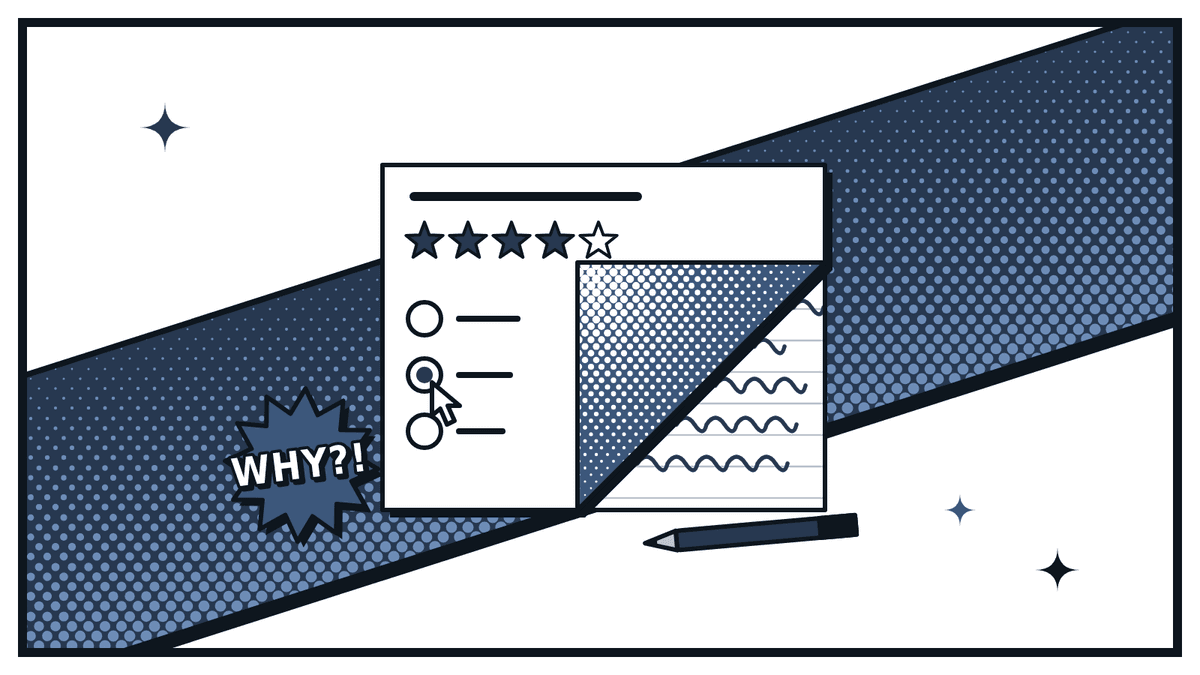
A good self-assessment blends two question types: quick scaled ratings on things like workload, recognition, and core competencies, and a few open-ended questions about accomplishments, setbacks, and priorities. The scale is fast. The open questions are where reflection happens. All scale, and the review becomes a spreadsheet. All open questions, and it becomes a writing assignment nobody has time to do justice.
Even the rating labels do quiet work. A scale that spells out what each answer means (not meeting, meeting, or exceeding expectations) gives everyone a shared standard. Without it, one employee's "Agree" can mean something entirely different from another's.
What the Ratings Alone Miss
Why a Number Rarely Tells the Whole Story
Two employees can both select "Agree" on "I meet my deadlines" for completely different reasons. One makes every deadline through visible strain. The other has room to spare and could take on more. A rating scale compresses difference into a shared unit, which is useful for comparison and nearly useless for explanation.
The open answers are where that difference surfaces. Picture a developer describing two new programming languages picked up since the last review, or a marketing coordinator describing a campaign that measurably lifted followers and website traffic. Either tells a manager something no single click could.
A rating is a summary. An open answer is evidence.
Why People Under-Rate or Over-Rate Themselves
Self-ratings skew in both directions for reasons that have little to do with performance. In 1999, psychologists Justin Kruger and David Dunning described how people with lower competence in an area often lack the awareness needed to judge it accurately, which can push their self-ratings up. Skilled people, meanwhile, often underestimate themselves, assuming what came easily to them was easy for everyone.
When Leaders Assess Themselves
The same mirror applies to leaders, often more strongly. A manager may rate their own feedback or communication highly while their team experiences something quite different. In the 360 results we see at Leadbacker, the most useful insight rarely comes from a leader's score alone. It comes from the distance between how leaders see themselves and how their teams see them, and from what leaders write when they explain that gap.
Making the Exercise Worth It
Why Specificity Is the Real Test
A strong open answer is specific enough that someone outside the conversation could understand what happened: a sales approach that changed after a setback, or a process improvement with a name and a measurable effect. Vague answers usually signal that the employee wasn't given enough structure to reflect, not that there was nothing worth saying.
A specific answer is checkable. A vague one just has to be trusted.
What a Manager Should Actually Do with It
The real test isn't whether a self-assessment was filled out. It's whether the manager's view of the review period changes after reading it. If a template never once surfaces something the manager didn't already know, the questions probably aren't the right ones.
What a Self-Assessment Is Actually For
A self-assessment is the one part of a review process where the employee genuinely goes first. What they choose to say, in their own words, is usually worth more than the rating attached to it. Read the ratings. Then read the sentences underneath them, because that's usually where the actual review begins.
“"Where do you think your own view of your work differs most from how the team sees it?"”
FAQs
What is the purpose of an employee self-assessment?
It gives employees the first word before a manager shares their view, turning the review into a conversation they help shape. It also gives managers context they would otherwise have to guess at, especially through open answers about accomplishments, setbacks, and priorities.
Why do employees rate themselves too high or too low?
Self-ratings skew for reasons unrelated to performance. Research by Kruger and Dunning (1999) describes how people with lower competence often lack the awareness to judge it accurately, while skilled people often underestimate themselves. Open questions asking for specific examples help correct for this.
What questions should a self-assessment include?
A mix of quick scaled ratings and a few open-ended questions. Ratings cover areas like workload, recognition, and core competencies. Open questions should ask what went well, what didn't, and what comes next, with specific accomplishments rather than general impressions.
How should managers use self-assessment results?
Read the open answers before the ratings and look for where the self-rating and your own view disagree. Treat vague answers as prompts for follow-up questions. A useful self-assessment should change at least one thing about the conversation that follows.
Sources Referenced
Kruger, J., & Dunning, D. (1999). Unskilled and Unaware of It: How Difficulties in Recognizing One's Own Incompetence Lead to Inflated Self-Assessments. Journal of Personality and Social Psychology.
Continued success reading between the ratings, Your Leadbacker Team