Engagement rises +7% — and operational downtime improves across the network.
A national waste management operator with operations spread across 12 federal states ran a structured people analytics programme. Connecting engagement data, skill assessments and leadership culture scores to operational KPIs revealed where the gaps were — and what to act on first.
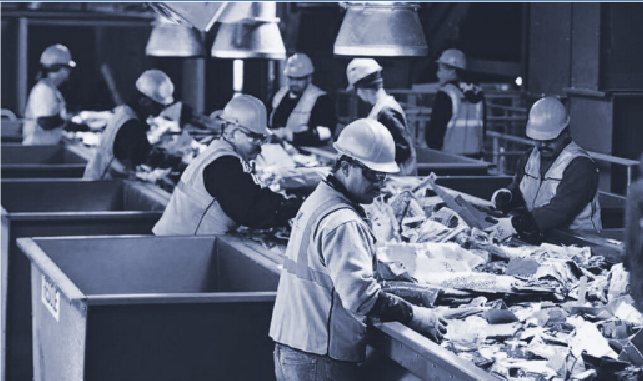
The challenge
A waste management and recycling company operating across 12 German federal states, with approximately 3,000 employees, needed to connect people data to operational performance. Employee retention had become a strategic priority across the organisation. Leadership sought a better understanding of the factors influencing engagement, development readiness and long-term workforce stability. Skill readiness across the workforce sat below the 85% threshold the business required. Leadership culture varied significantly between regions, and operational KPIs — including downtime and recycling throughput — were moving in the wrong direction at underperforming sites.
The business operated across distinct service lines — collection and logistics, recycling and treatment plants, maintenance and technical services, and support functions — each with different engagement dynamics and risk profiles. A group-level average masked where the real problems were.
Baseline diagnostics
Bi-annual pulse surveys combined with annual skill and leadership assessments covered three core diagnostic areas across all service lines and locations. The data established a group-level baseline — and surfaced significant variation between functions, regions and seniority levels.
The diagnostic work identified which service lines and regions diverged from the group mean — and which operational metrics correlated with those differences.
Voice of employees
Frontline comments were direct, repeated and consistent across regions:
“Vehicles break down and no one updates us on the schedule.”
“Route changes come with no warning.”
“I've asked for training three times — still nothing.”
“Management decides things and we find out afterwards.”
Interventions
- 01
Frontline feedback loops
Site managers in collection, recycling and maintenance introduced structured monthly stand-ups. Crews raised operational concerns; leadership committed to acting on a defined number per cycle. Quick wins on vehicle scheduling, protective equipment and shift handover followed — and were visible to the teams that raised them.
- 02
Supervisor upskilling
Team leaders across all service lines received people-management coaching from internal HR business partners — structured around communication, recognition and conflict handling, not only technical compliance. The my360 assessment identified blind spots and tracked development over time.
- 03
Skill-readiness programme
A development dialogue process was introduced for all operational roles, with individual skill assessments and agreed training paths tracked through the system. A pilot Skill Academy across three regional hubs targeted the 85% qualification readiness threshold — with automated monthly data linking HR and operations data to track progress.
Outcomes
After the initial pilot period, the integrated people analytics approach showed measurable movement across engagement, culture, skills and operational KPIs. Results reflect pilot data from 2024/25; a 12–18 month observation window is recommended for stable conclusions.
“Employee Net Promoter Score (eNPS): Logic and Evolution of this Ratio, current Benchmarks compared to iBDP, and selected Industry Case Studies”, Leadbacker, 2025. Pages 12–13. Composite, anonymized case based on patterns observed across Leadbacker client deployments in the waste management and recycling sector.
Image: Unsplash.