Table of Contents
- Your Company's Ability to Learn From Its Own People
- Why Organizational Intelligence Pays Off: Problems Get Heard Months Sooner
- How Is It Different From Traditional People Analytics?
- What Does It Look Like in Practice?
- Insight Only Works If People Feel Safe to Give It
- Start Small: Pick One Decision That Currently Runs on Instinct
- Try this in your next 1:1
- FAQs
- Sources Referenced
What Is Organizational Intelligence?
Your Company's Ability to Learn From Its Own People
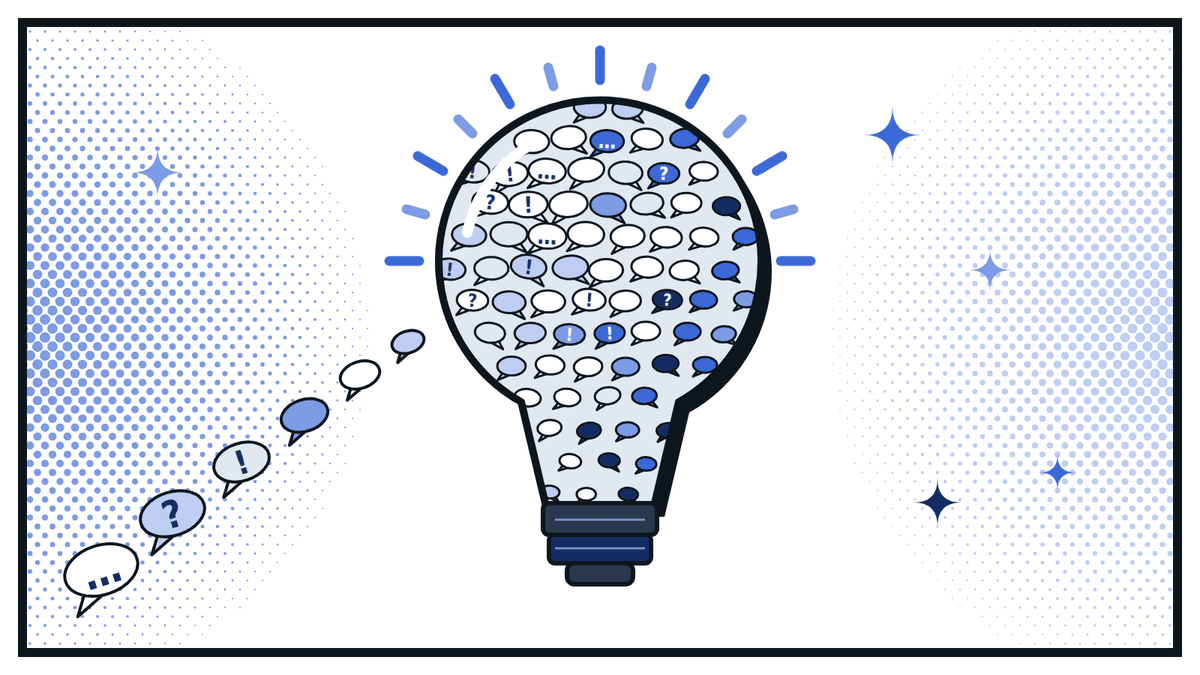
Organizational intelligence is a company's ability to learn from its own people. It means that what employees know, notice and experience reaches the leaders who make decisions, in time for it to matter. A company with strong organizational intelligence does not rely on gut feeling or an annual survey to know how things are going. It can see where trust is growing, where pressure is building, and what is likely to happen next.
Gut feeling is a shaky guide. Nobel-winning psychologist Daniel Kahneman has spent a career showing that confident judgment is less reliable than it feels, which is why evidence from the people closest to the work matters.
It rests on three habits: listening continuously, making sense of what people say, and acting on it visibly.
Intelligence is not more data. It is better contact between what people experience and what leaders decide.
Why Organizational Intelligence Pays Off: Problems Get Heard Months Sooner
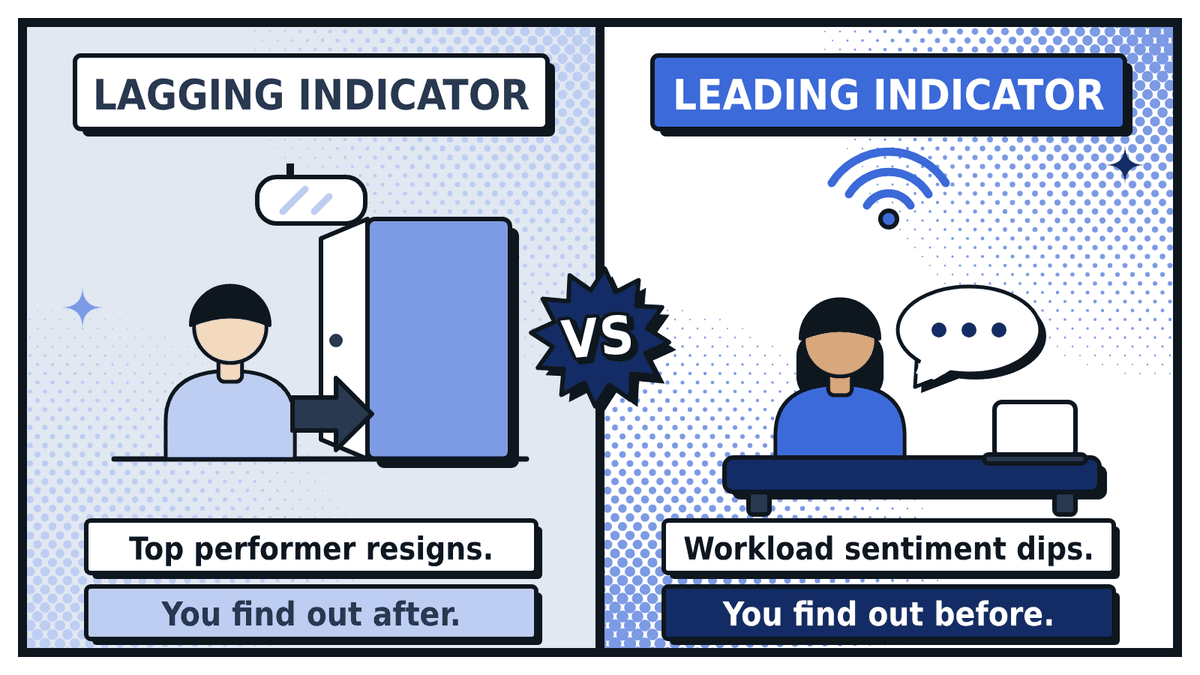
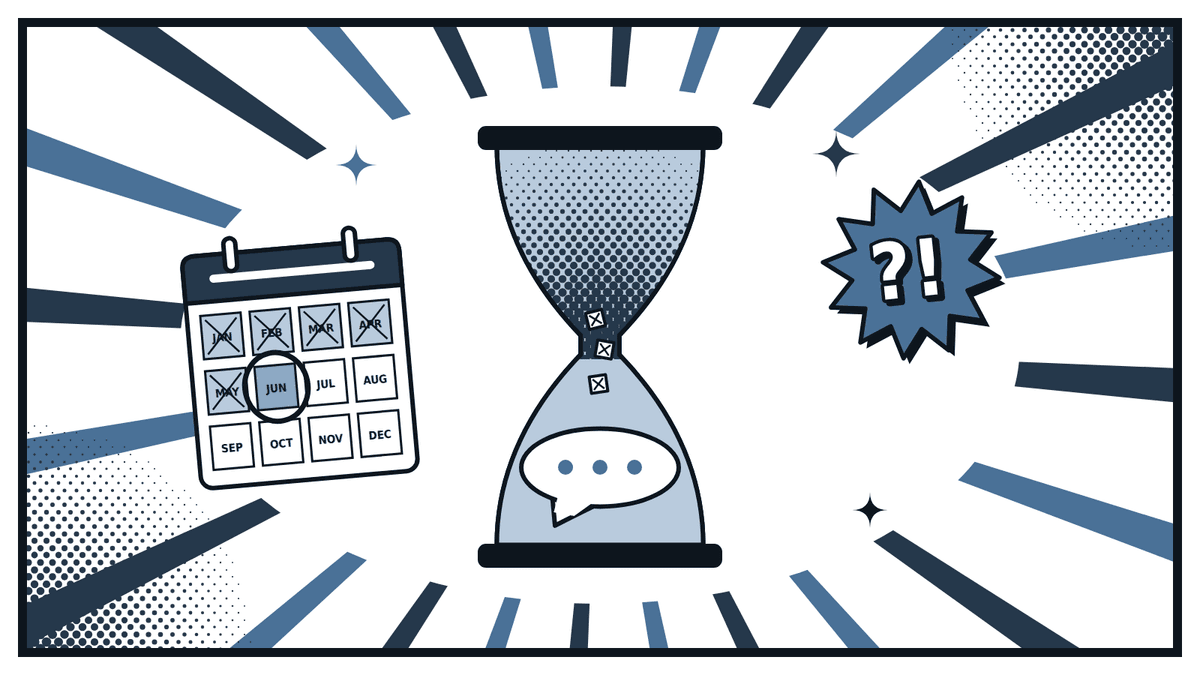
Most organizations find out too late. A resignation, a failed change program or a quiet drop in quality is usually the end of a story that began months earlier. Organizational intelligence moves the moment of discovery earlier, and that creates value in four ways.
Better leadership decisions: leaders see where managers need coaching and whether a change was understood or only announced.
Earlier warnings: retention risk and burnout show up before they become resignations and replacement costs.
Smarter business choices: leaders know which teams can absorb a restructure and where development spending will actually be used.
Stronger trust: when people see feedback lead to action, they engage more and give more honest input next time.
Consider a hypothetical high performer who feels stuck. A manager who learns this in a conversation can offer a new path. A manager who learns it at the exit interview can only take notes.
The risk is not theoretical. Microsoft's 2021 Work Trend Index, a survey of more than 30,000 people in 31 countries, found that about 41 percent of the global workforce was considering leaving their employer that year. Most of those intentions would not appear in an HR dashboard until they became resignations. McKinsey's work on organizational health makes the wider point: leadership, culture and execution can be measured, and they are linked to financial performance.
How Is It Different From Traditional People Analytics?
People analytics is excellent at counting: attrition, time to hire, absence, promotion rates. These numbers are reliable, but they describe outcomes after the fact. By the time a resignation appears in them, its causes are months old.
People analytics counts outcomes, while organizational intelligence explains causes
It looks back, while organizational intelligence looks ahead
It reports to HR, while organizational intelligence informs every leader
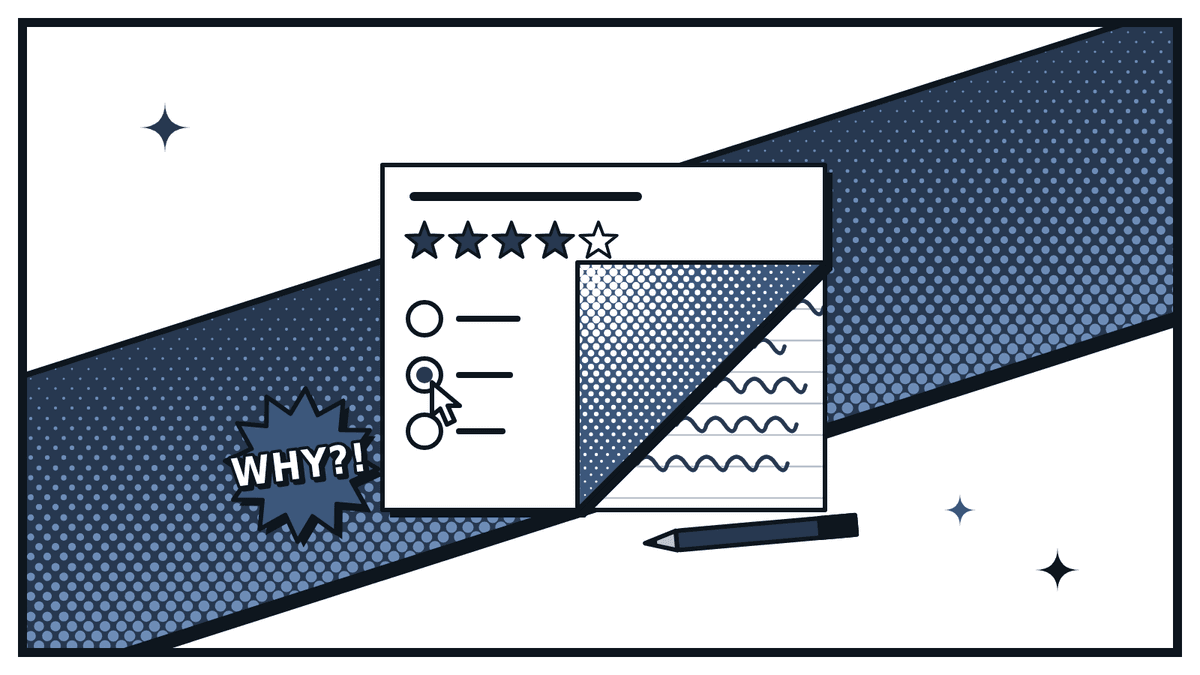
Neither replaces the other. Analytics shows what moved. Intelligence helps explain why, and where to act.
What Does It Look Like in Practice?
Consider a hypothetical company whose engagement score holds steady. Inside it, one large department improves slightly while a smaller team drops sharply, and the average hides the drop. Analytics reports stability. Intelligence asks which team moved and why. In Leadbacker's work, a recurring pattern is that the most useful signal sits in the gaps between groups, which is why comparing departments, locations and seniority matters more than any single average.
Or take a hypothetical return-to-office announcement. Leaders with this kind of insight can see within weeks which teams read it as reasonable and which as a breach of trust, and adjust before opinions harden.
Insight Only Works If People Feel Safe to Give It
When Google studied what made its teams effective in Project Aristotle, psychological safety, the idea developed by Harvard's Amy Edmondson, emerged as the most important factor. People speak up when they trust they will not be punished or ignored. That makes follow-up part of the system: when employees see feedback change something, they answer more honestly next time.
Start Small: Pick One Decision That Currently Runs on Instinct
Choose one decision that relies on instinct today, such as where to invest in manager development.
Listen more often than once a year, with short questions people can answer in minutes.
Share what you heard and what will change with the people who told you.
The test of an intelligent organization is simple: when someone close to the work spots a problem, how long before it changes a decision?
"What is one thing you notice on this team that I probably cannot see from where I sit?"
FAQs
What is organizational intelligence in simple terms?
It is a company's ability to listen to its people, make sense of what they say, and use it to decide better. It is the difference between owning data and learning from it, so leaders act on evidence instead of assumptions.
How is it different from people analytics?
People analytics measures HR outcomes such as turnover or time to hire. Organizational intelligence adds employee voice and context, explaining why those outcomes occur and where to act. They work best together: analytics shows the what, and intelligence supplies the why and the next step.
Does an organization need special technology to start?
Not to begin. A short, regular listening rhythm and a habit of sharing results will teach you more than a large system built too early. Technology becomes useful once feedback outgrows what leaders can reasonably read and compare by hand.
Sources Referenced
Kahneman, D. (2011). Thinking, Fast and Slow. Farrar, Straus and Giroux.
Microsoft (2021). The Next Great Disruption Is Hybrid Work: Are We Ready? Work Trend Index.
McKinsey & Company. Organizational Health Index research.
Google re:Work. Project Aristotle (team effectiveness research).
Edmondson, A. (2019). The Fearless Organization. Wiley.